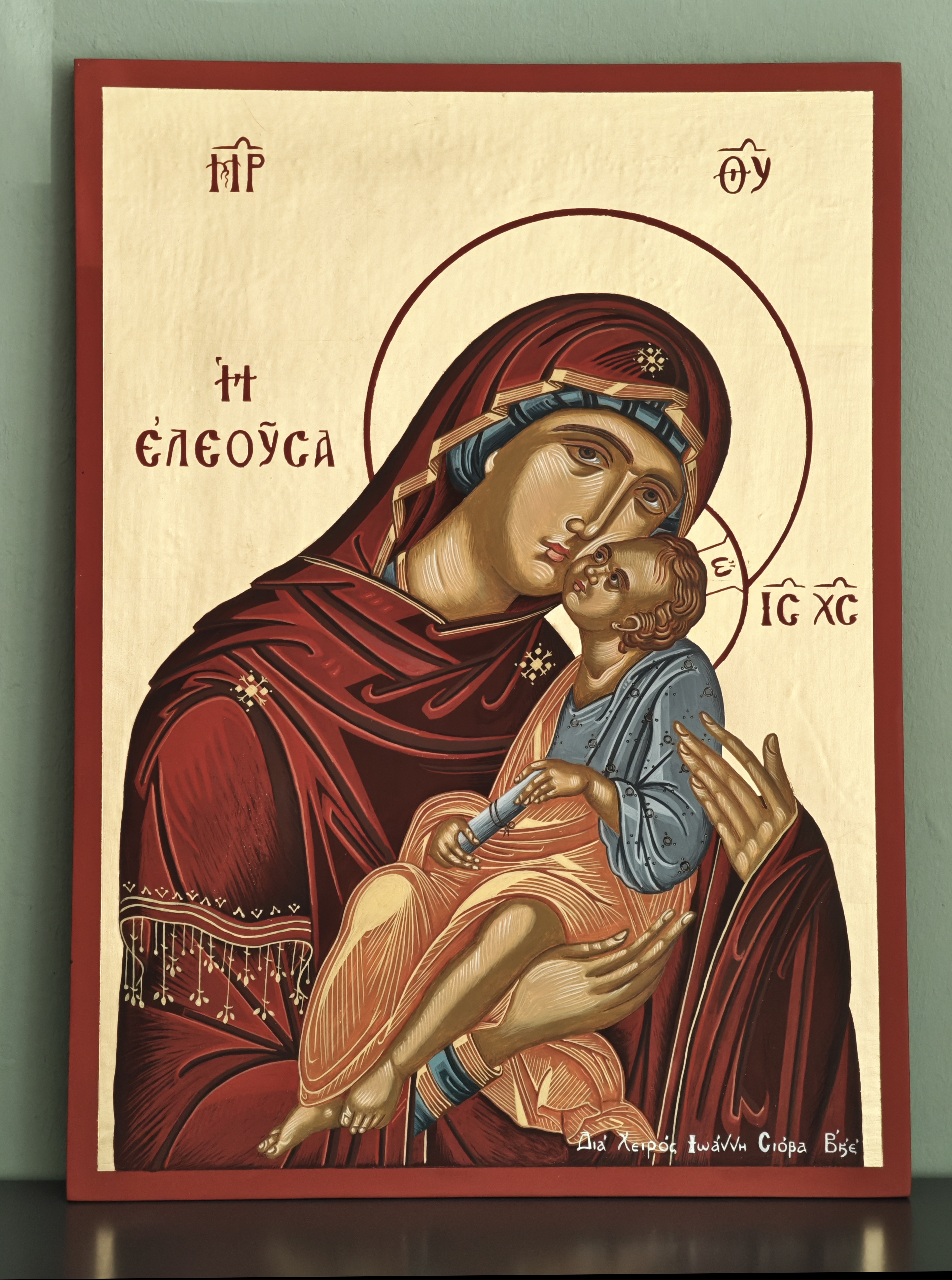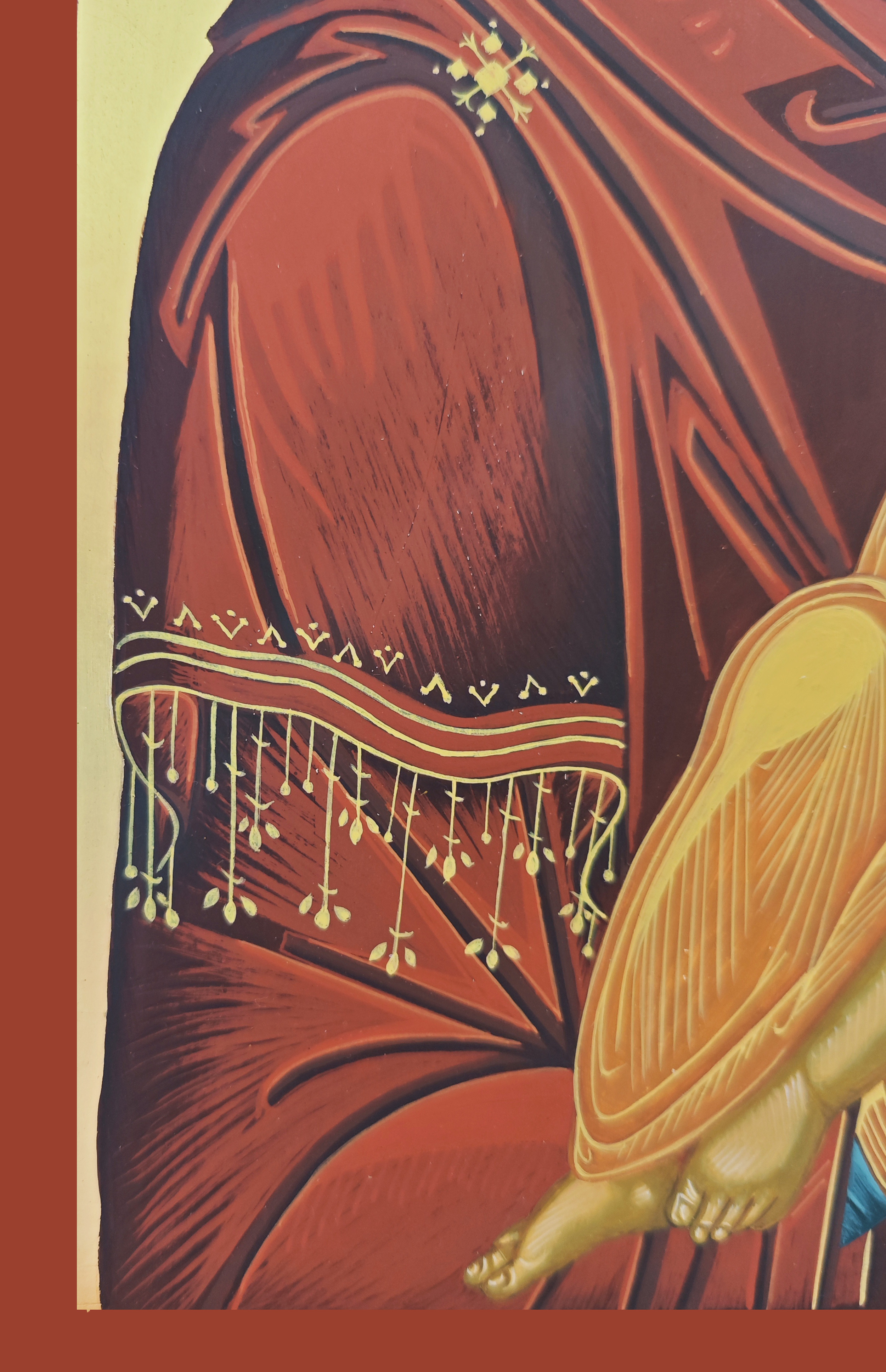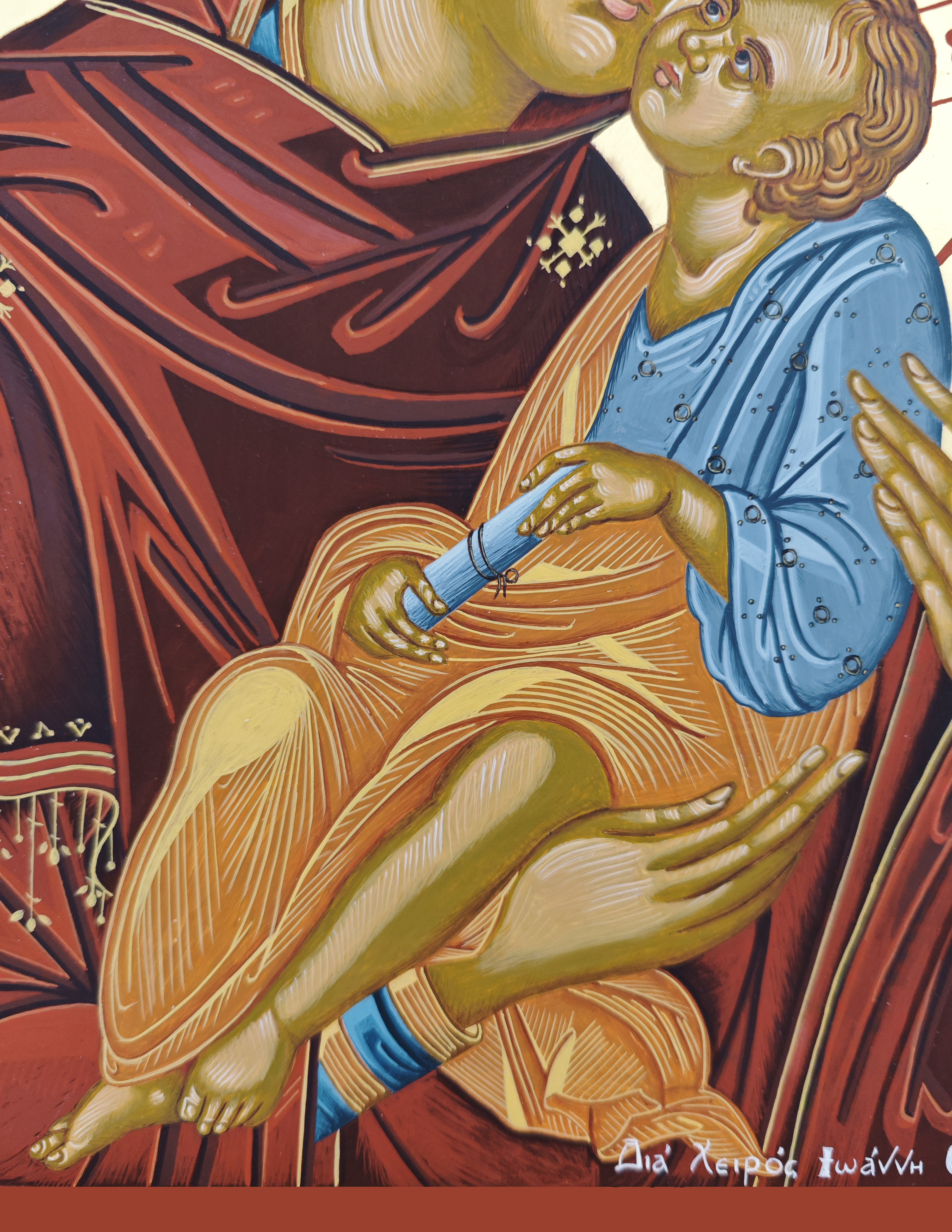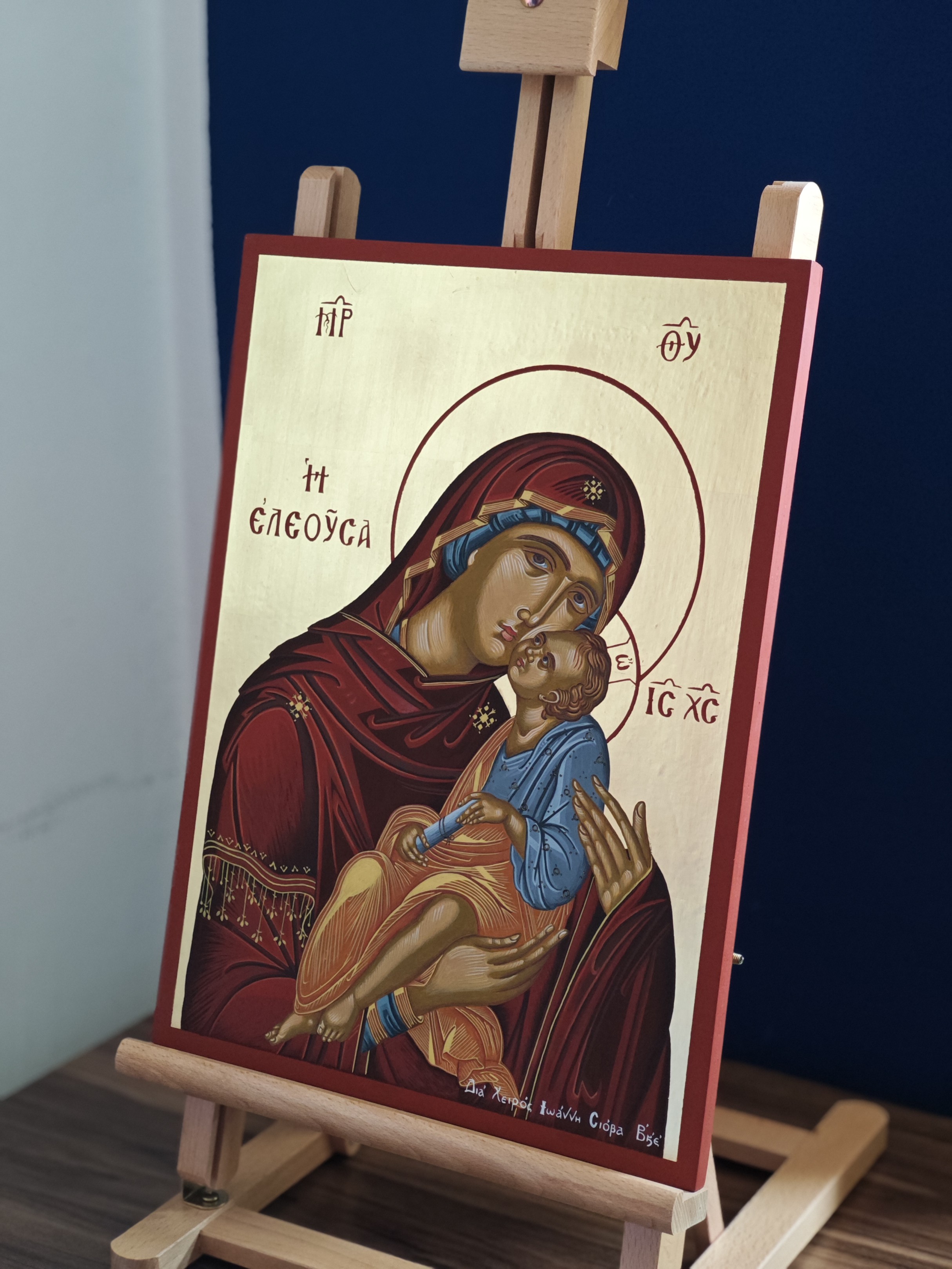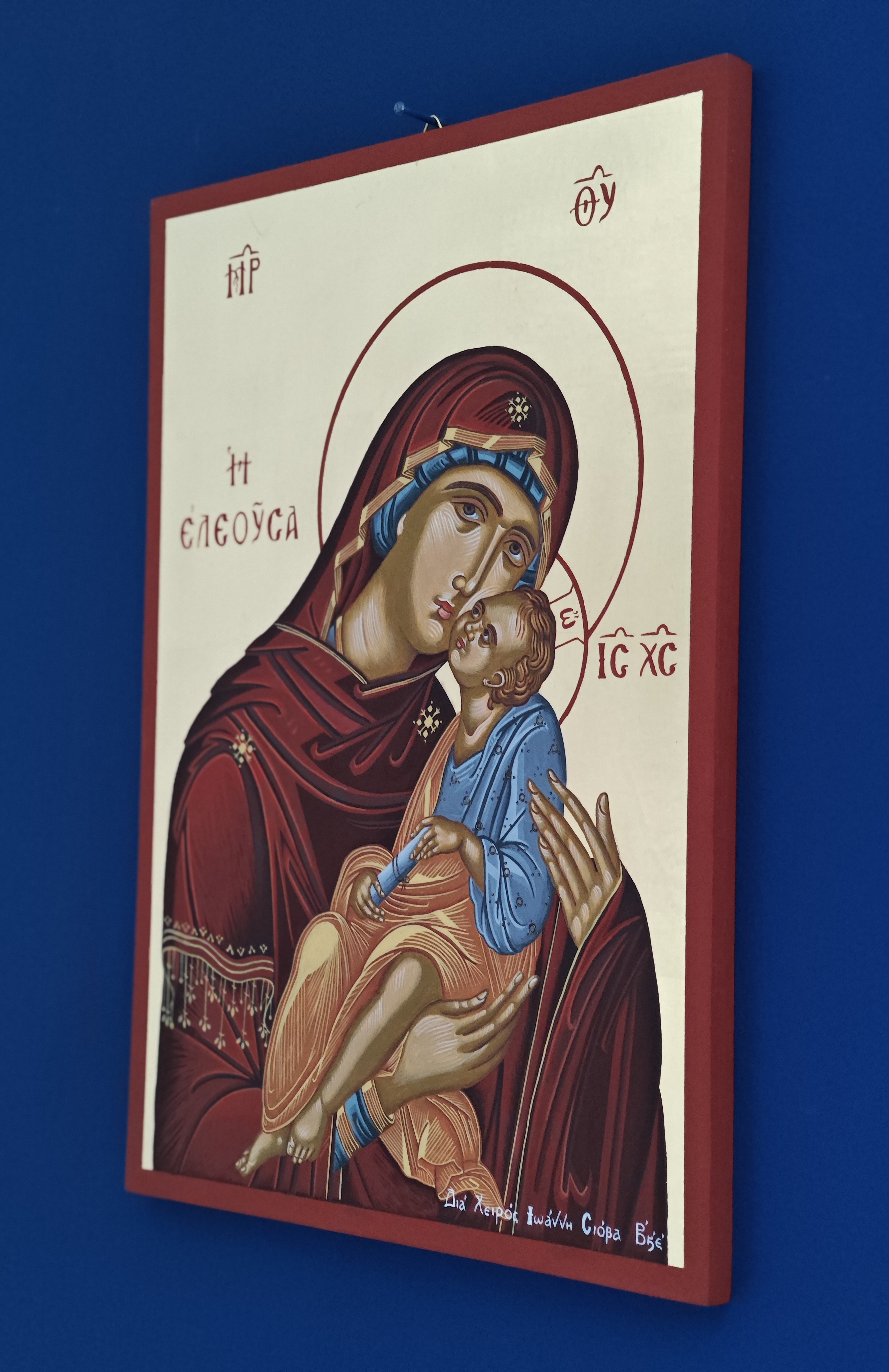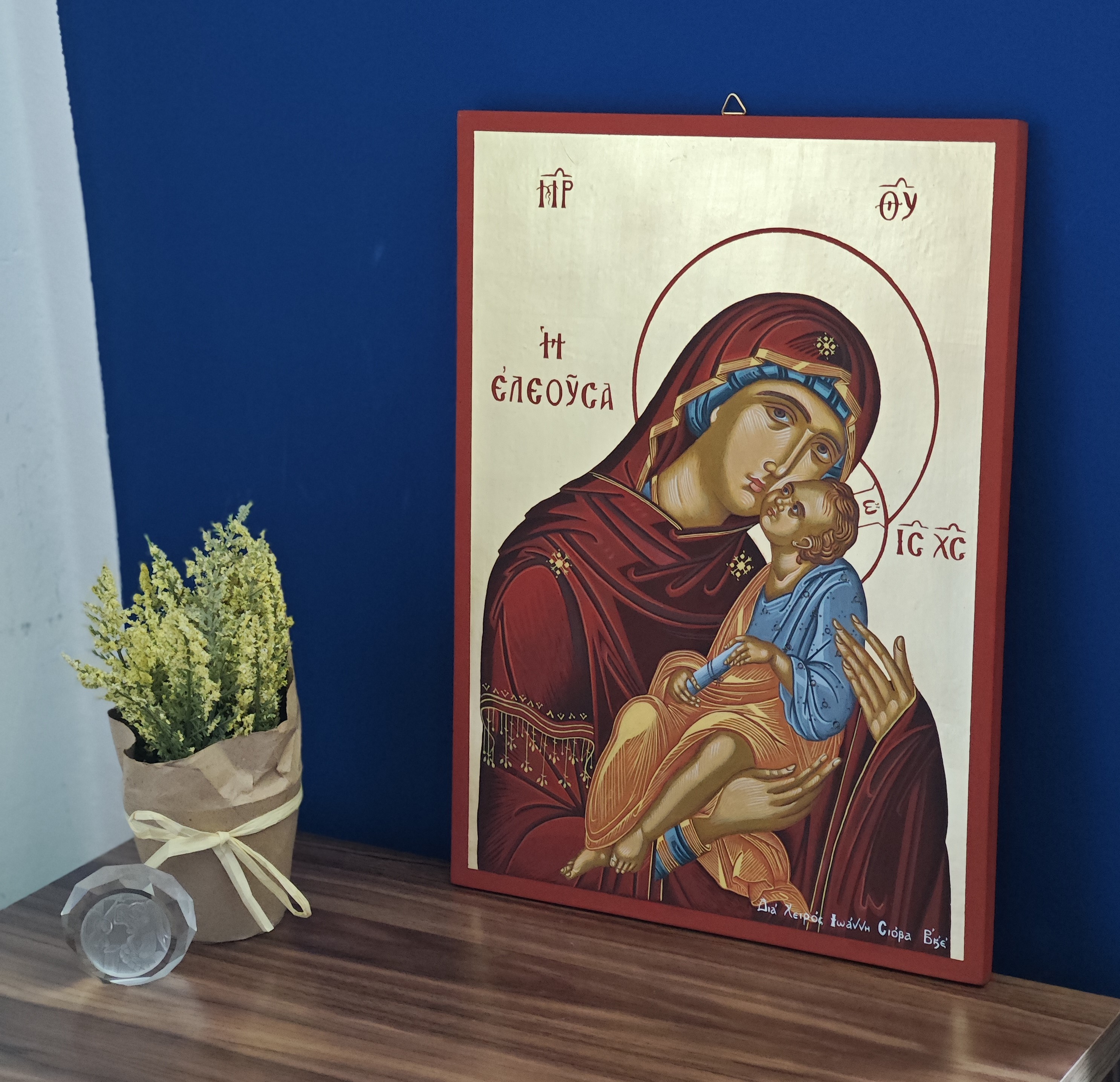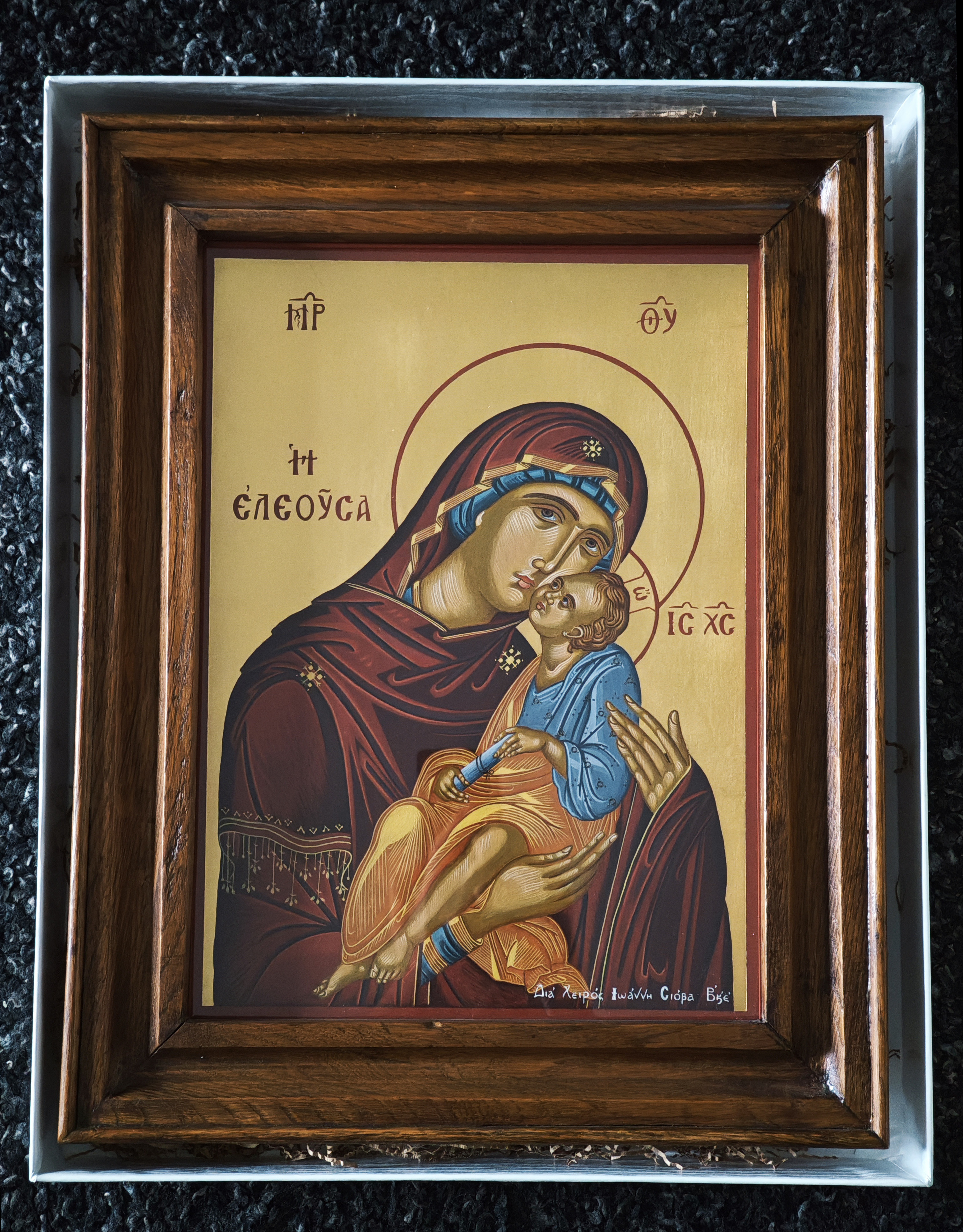
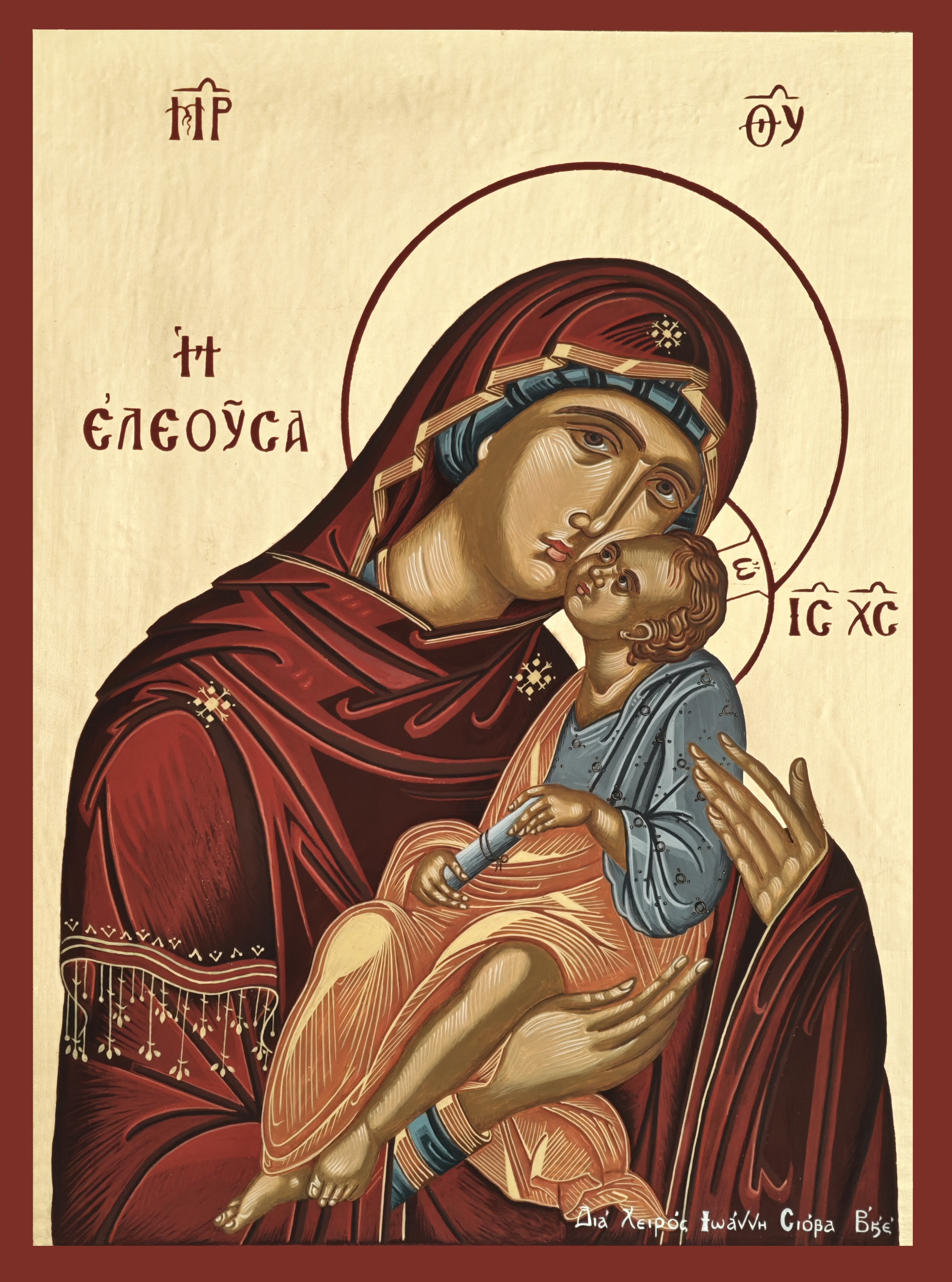
Eleousa is a title given to the Virgin Mary. The title Eleousa is attributed to her role as intercessor to Jesus Christ for divine mercy. This name is said to have greatly influenced Byzantine and post-Byzantine hagiographic art, where we find the iconographic type of the Virgin Mary Eleousa or Glykofilousa.
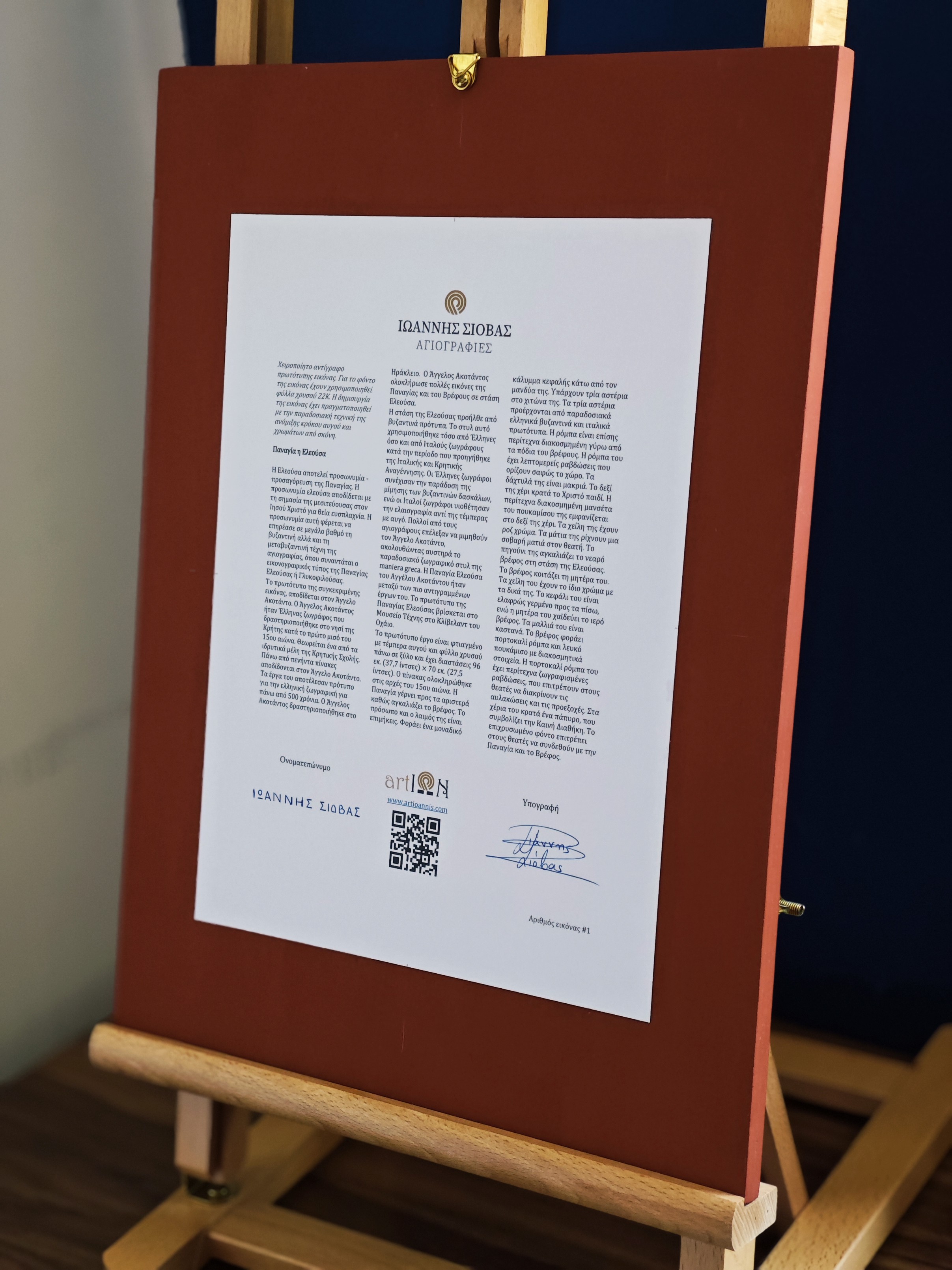
The original of this icon is attributed to Angelos Akotantos. Angelos Akotantos was a Greek painter who was active on the island of Crete during the first half of the 15th century. He is considered one of the founding members of the Cretan School. Over fifty paintings are attributed to Angelos Akotantos. His works served as a model for Greek painting for over 500 years. Angelos Akotantos was active in Heraklion. Angelos Akotantos completed many icons of the Virgin Mary and the Infant Jesus in a posture of mercy.
Eleousa’s pose was inspired by Byzantine models. This style was used by both Greek and Italian painters during the period preceding the Italian and Cretan Renaissance. Greek painters continued the tradition of imitating Byzantine masters, while Italian painters adopted oil painting instead of egg tempera. Many of the icon painters chose to imitate Angelo Acotanto, strictly following the traditional painting style of the maniera greca. Angelo Acotanto’s Panagia Eleousa was among his most copied works.
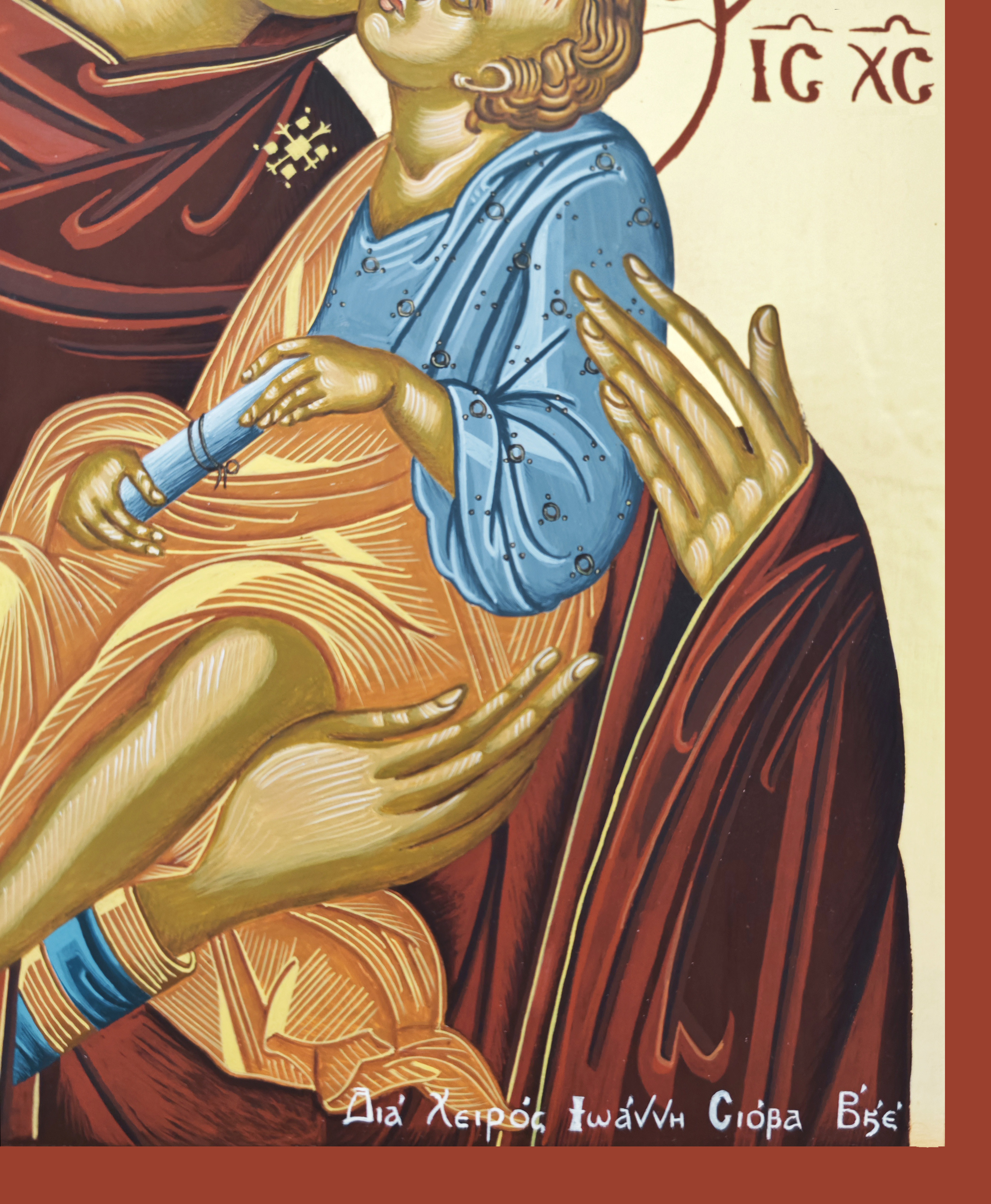
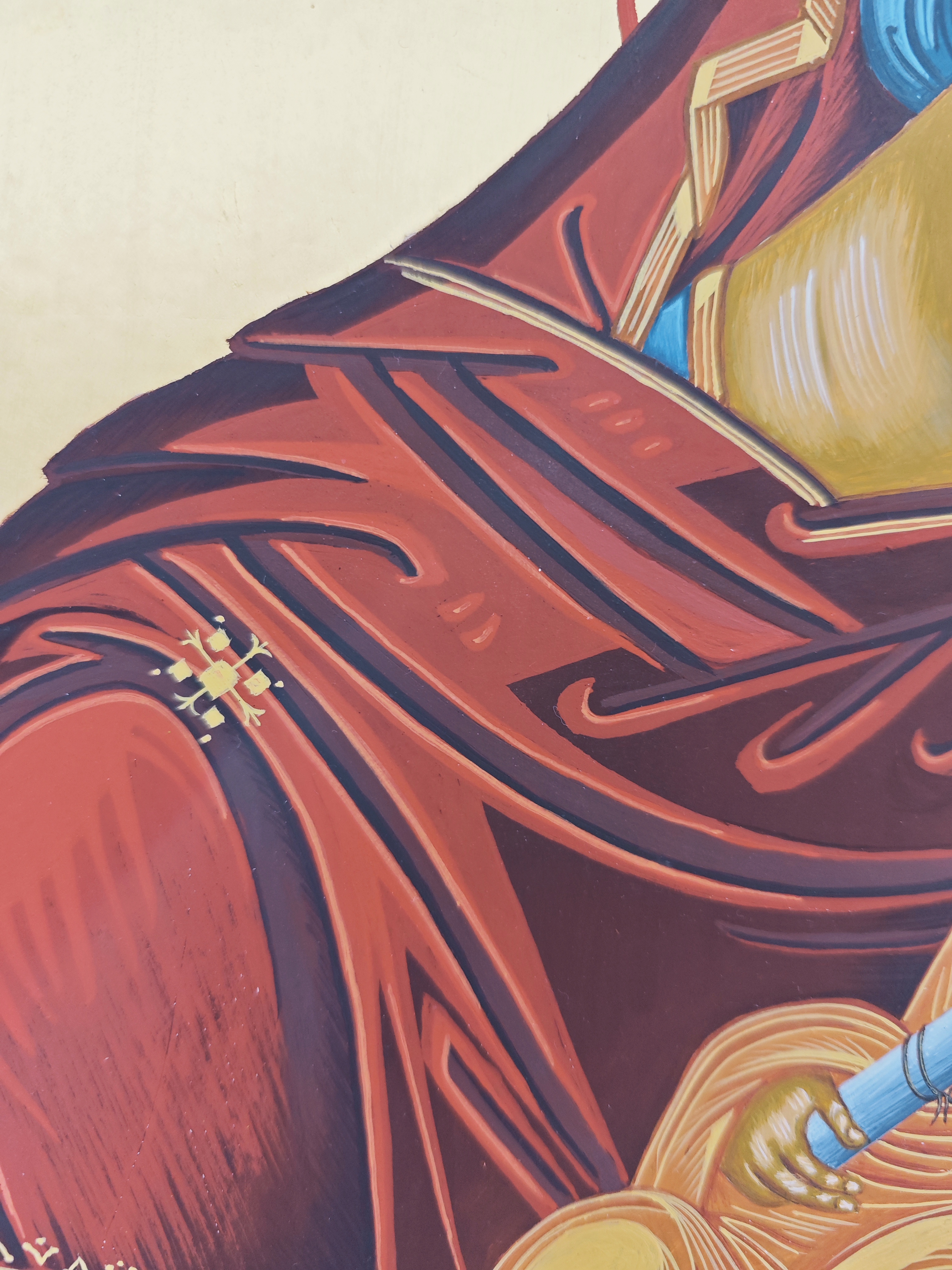
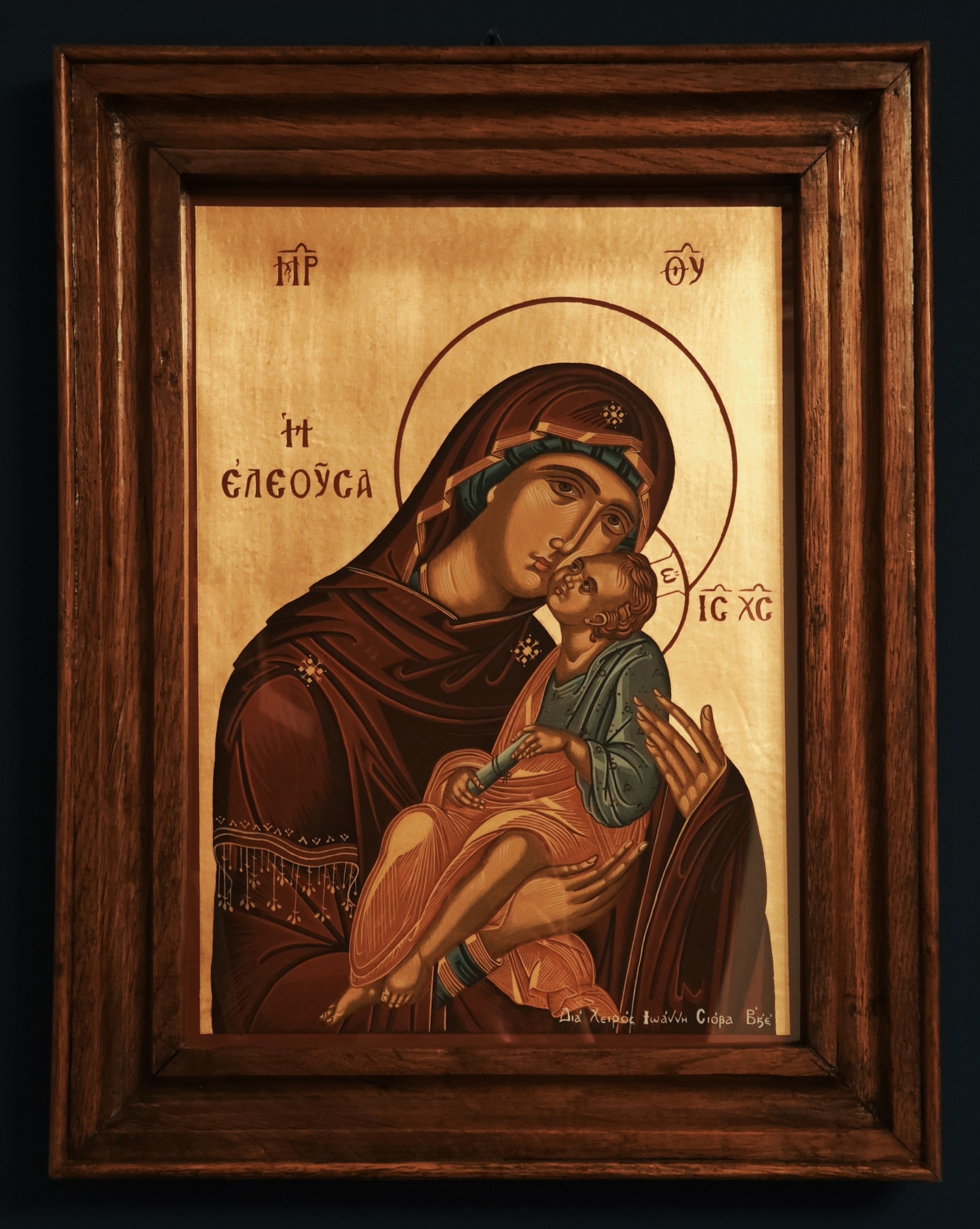
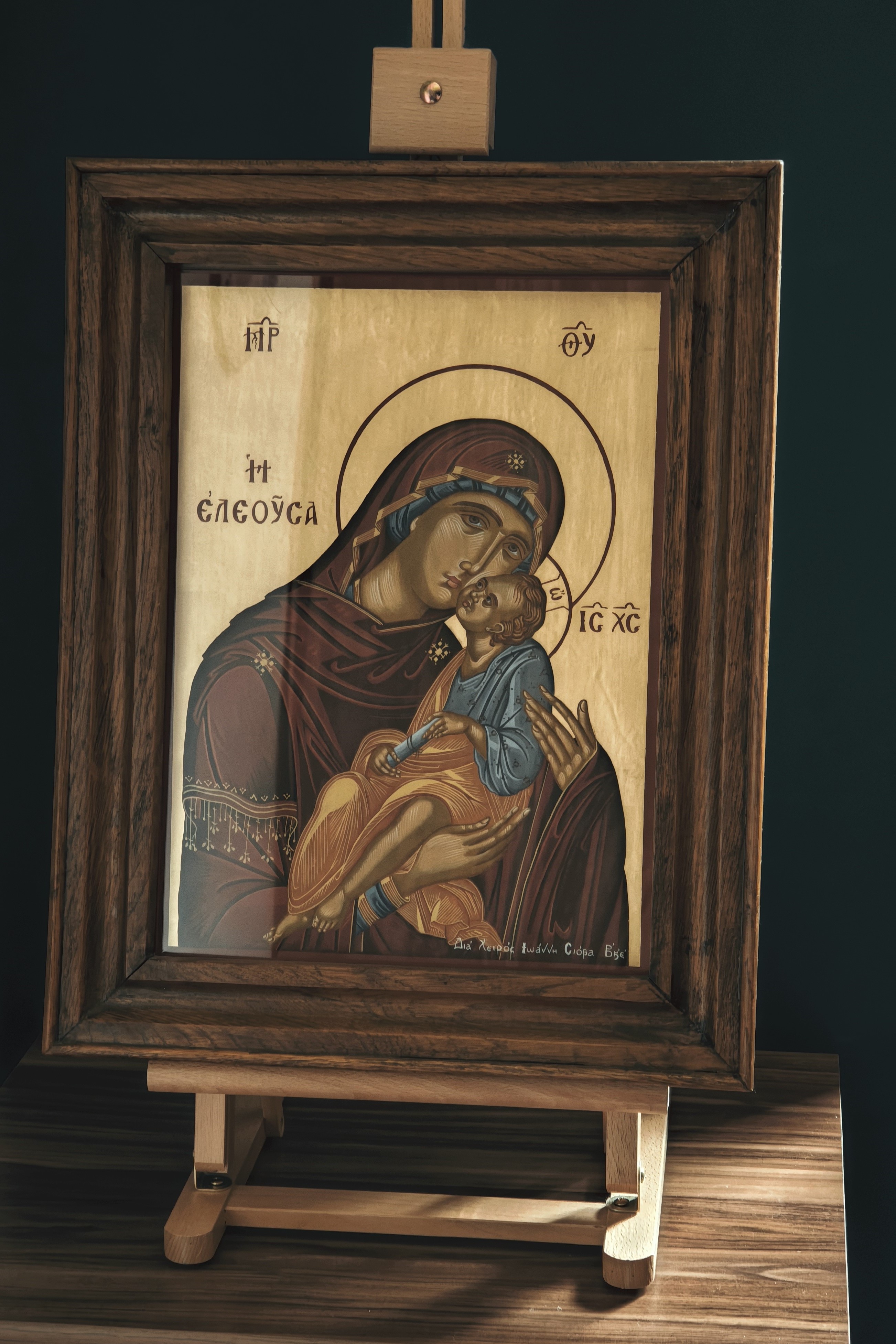
The original Panagia Eleousa is in the Cleveland Museum of Art in Ohio.The original work is made with egg tempera and gold leaf on wood and measures 96 cm (37.7 inches) × 70 cm (27.5 inches). The painting was completed in the early 15th century. The Virgin Mary leans to the left as she embraces the infant. The Virgin Mary leans to the left as she embraces the infant. Her face and neck are elongated. She wears a unique head covering under her cloak. There are three stars on her tunic. The three stars come from traditional Greek Byzantine and Italian originals. The robe is also elaborately decorated around the infant’s feet. His robe has detailed pleats that clearly define the space. Her fingers are long. Her right hand holds the Christ child. The elaborately decorated cuff of her shirt appears on her right hand. Her lips are pink. Her eyes gaze seriously at the viewer. Her chin cradles the young infant in the posture of Eleousa.The infant looks at his mother. His lips are the same color as hers. His head is tilted slightly backward, while his mother caresses the sacred infant. His hair is brown.
The infant wears an orange robe and a white shirt with decorative elements. His orange robe has elaborately painted stripes, allowing viewers to distinguish the grooves and protrusions. In his hands he holds a papyrus scroll, symbolising the New Testament. The gilded background allows viewers to connect with the Virgin Mary and the Infant Jesus.